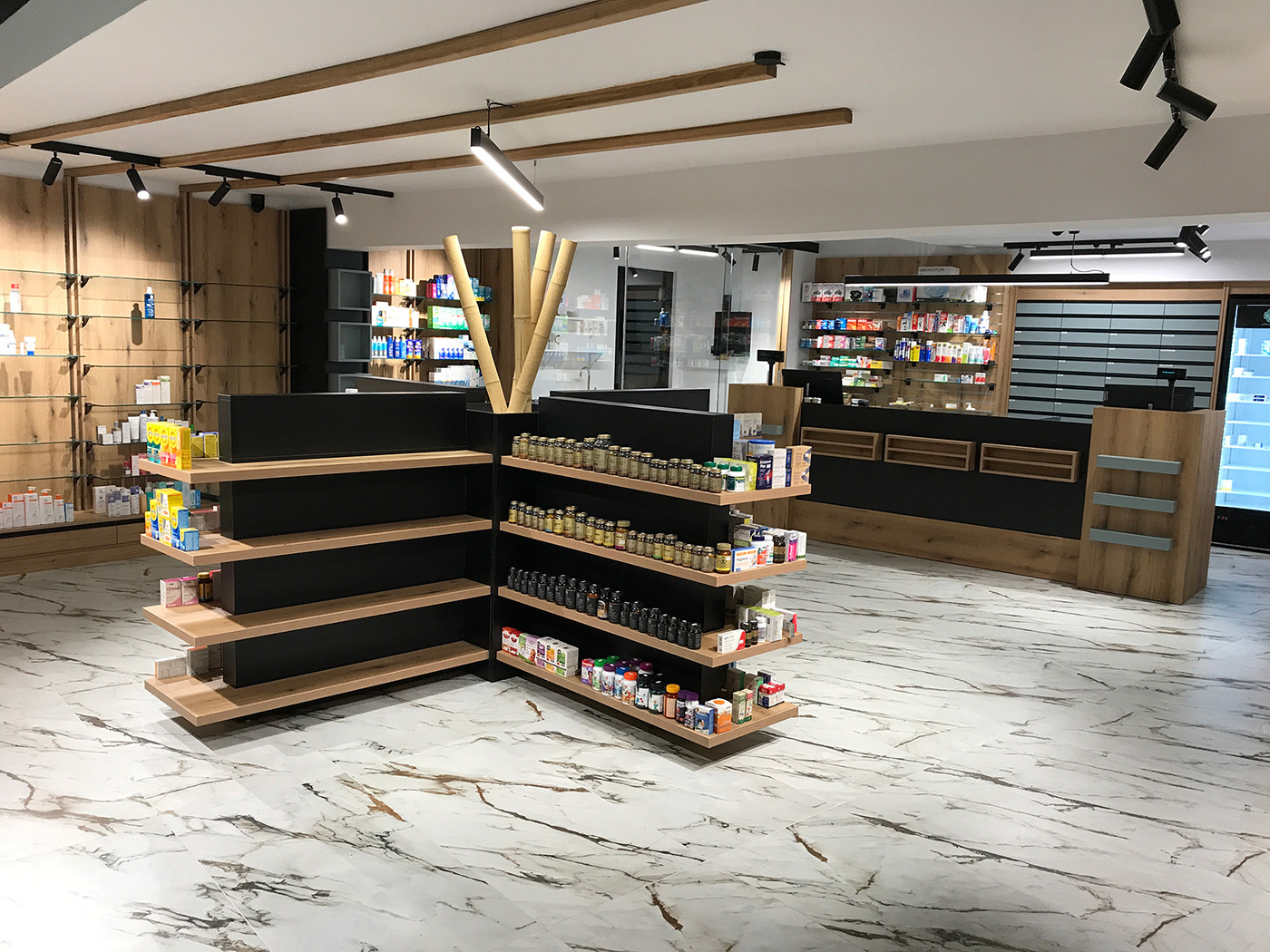
Pharmacy Renovation.


¨Do you know that feeling of euphoria when you visit a renovated pharmacy and you immediately feel comfortable and in the mood to shop?¨
Dozens of businesses of the same nature are now just a few square meters apart. Multiple distribution channels offering the same products and services, at the same time, have flooded the market.
Naturally, new methodologies such as Marketing and Merchandising have been assimilated into the art of Renovation Design Pharmacy.
COMMERCIAL ARCHITECTURE.
Pharmacy Renovation.
Introducing a cutting-edge approach that seamlessly blends innovative architecture [SCENOGRAPH] with the latest in techniques MARKETING and MERCHANDISING.
of shoppers do not return to a store if they don’t like its aesthetics. {shopify}

¨THE ARCHITECTURE OF PHARMACIES MEETS MARKETING AND MERCHANDISING¨
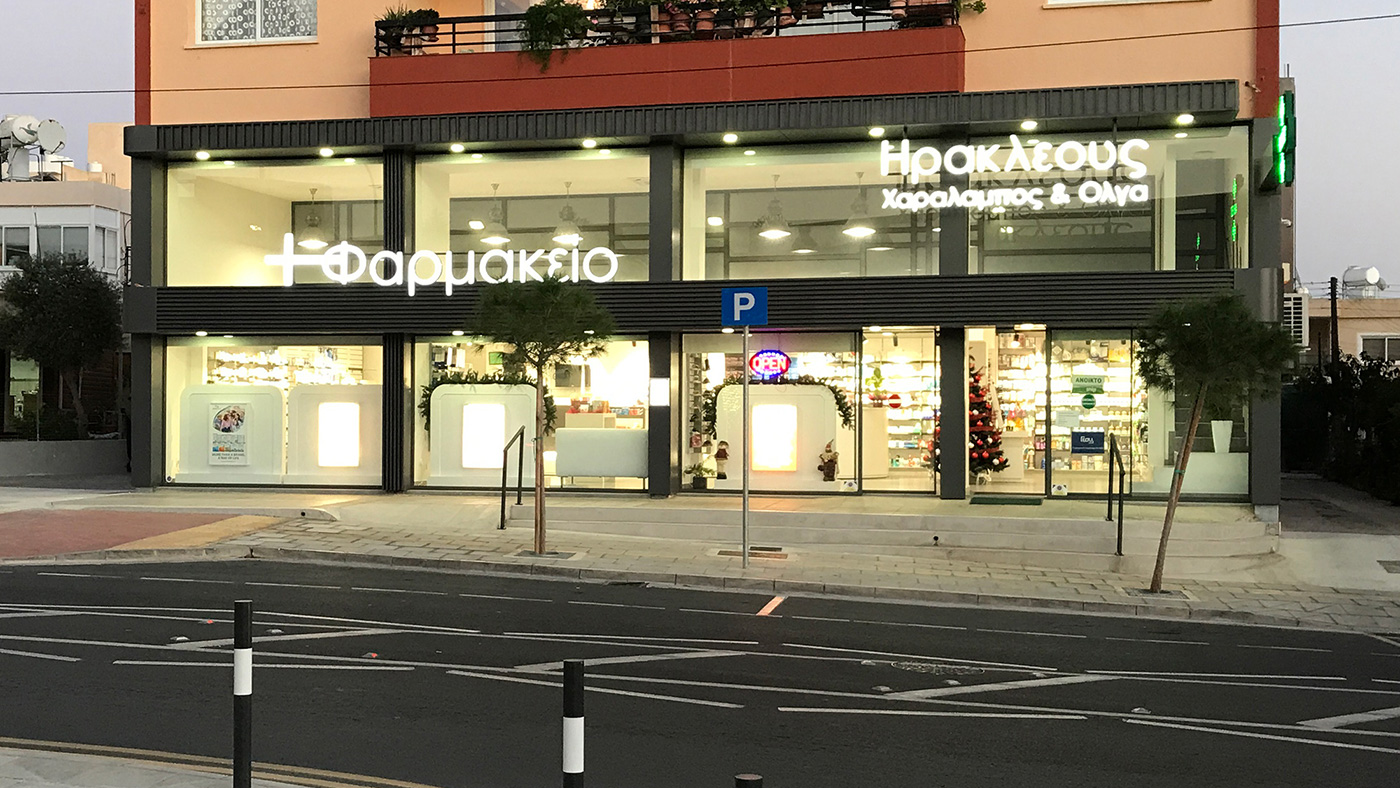
The realization of a thee-dimensional visual concept, expressed through a series of images that reflect the overall environment of the pharmacy. These images suggest a shared thematic direction that unifies the space.
This common theme creates a mental and emotional connection between the human factor {the consumer}, as well as the architectural elements we want to highlight. The goal is to define the aesthetic
identity of the pharmacy in a complete and coherent way.
Without scenography, the visual impression of the pharmacy would feel lifeless, silent, and devoid of personality.
SCENOGRAPHY.

ARCHITECTURAL LIGHTING STUDY.
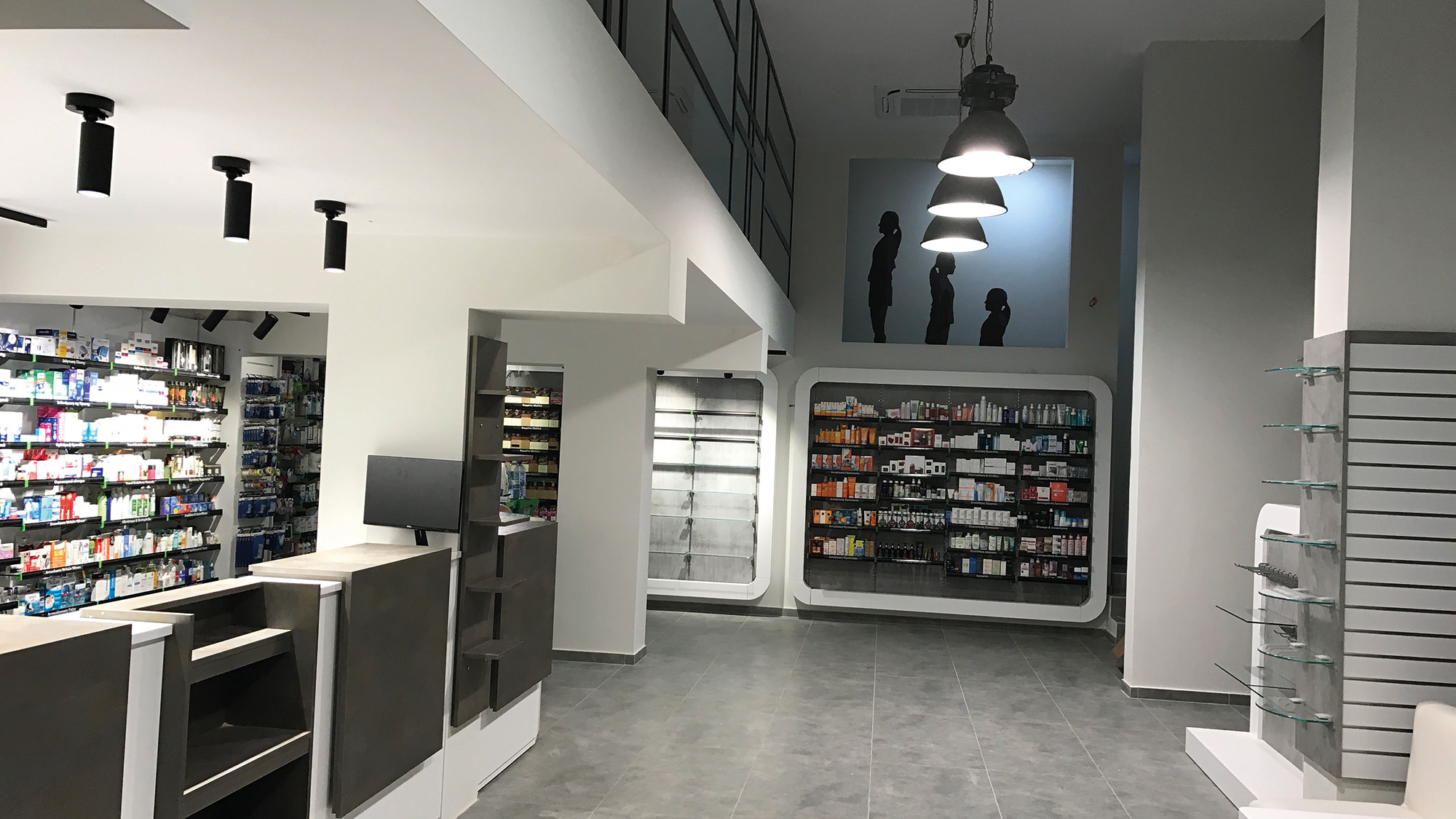
Lighting is a crucial element of commercial renovation, significantly impacting product visual perception and focal recognition.
The intensity, type, and lighting temperature are proven to affect both the work and commercial environment profoundly.

Subscribe to our Newsletter.
Would you like to receive our latest news?
Subscribe to our newsletter.
"*" indicates required fields


PROFESSIONAL PHARMACY FURNISHINGS.
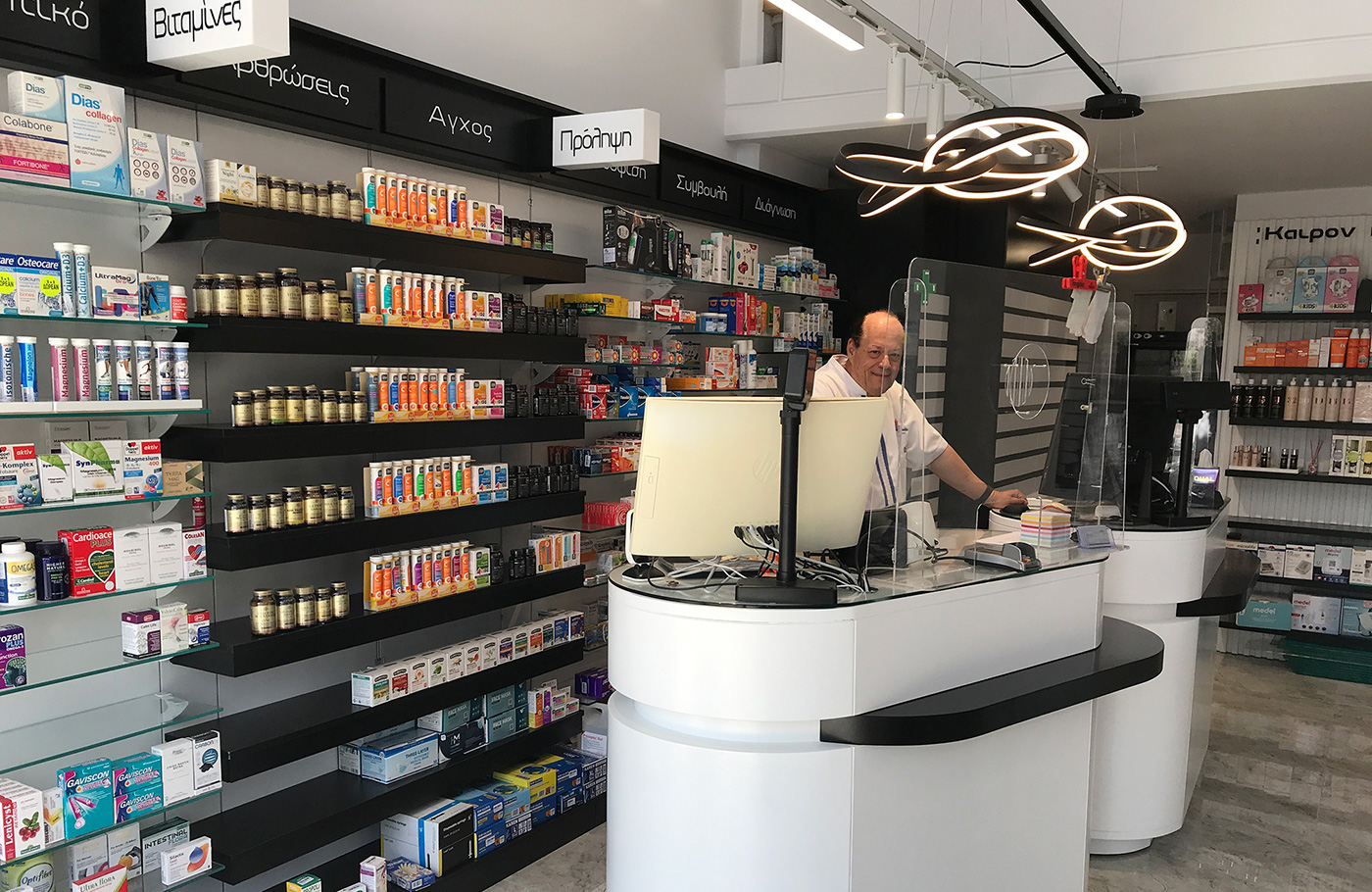
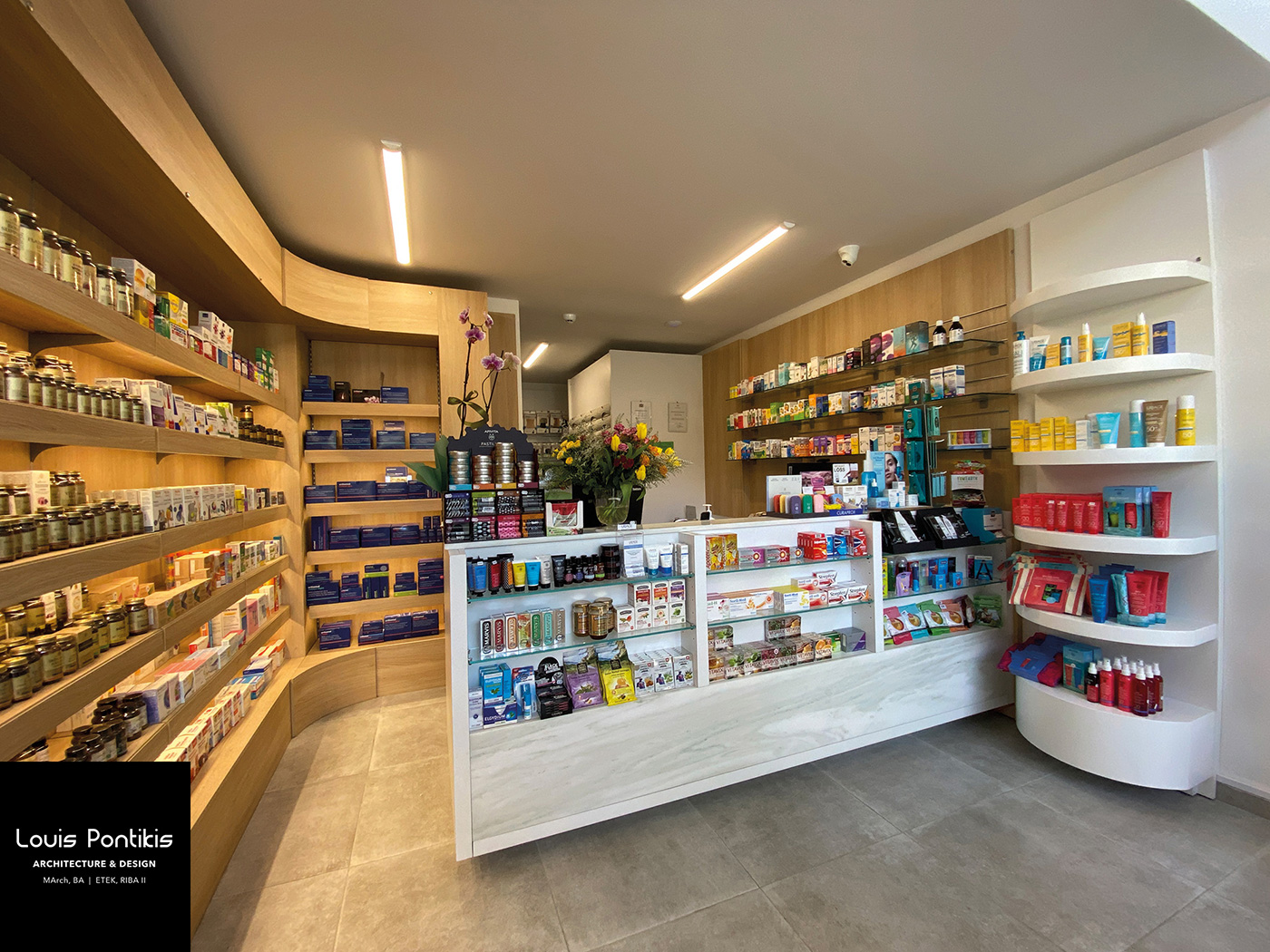
The furnishing of each pharmacy is custom-designed with your professional style and identity in mind. It aims to aesthetically express the values and character your business represents in a tangible way.
Every piece of furniture is carefully adapted to the specific spatial dimensions of the pharmacy, combining ergonomics, flexibility, and functionality in perfect harmony.
All materials and components are sourced through long-term collaborations with trusted European manufacturers, ensuring not only a high level of aesthetics but also the durability required in every professional space.
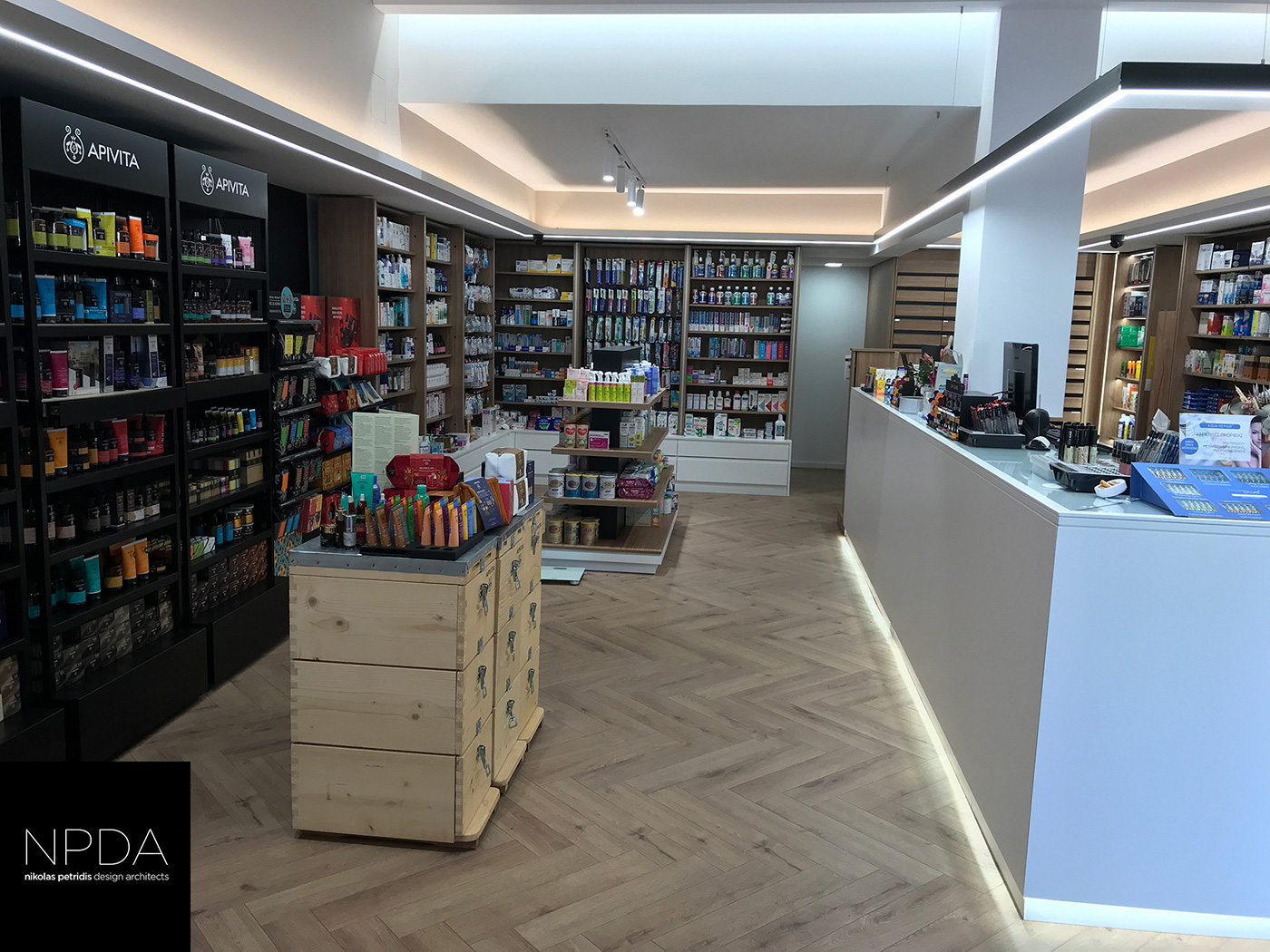
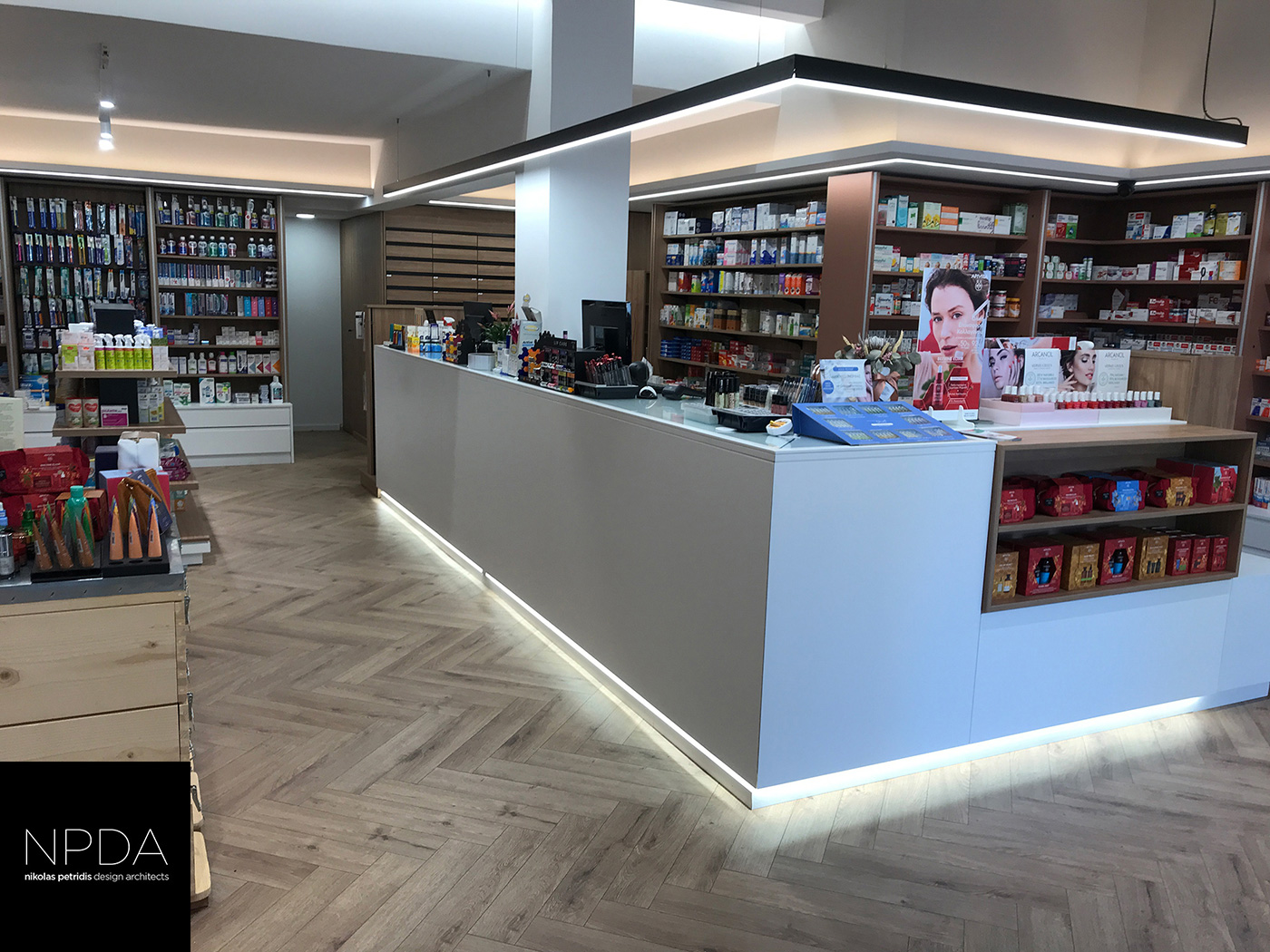
Purchase decisions are now made within the store. As a result, attracting the buyer’s attention and effectively communicating information are critical for a successful sale.
{Research by the Henley Centre}

CUSTOMER JOURNEY MAP.
The detailed mapping of the pharmacy’s commercial environment, which visually outlines the alternative routes we want different consumer groups to follow as they navigate though the areas where product categories are displayed.
The goal is to guide consumers methodically and effortlessly to recognize, compare, and choose their purchases. This mapping – a unique design tailored to each pharmacy – will incorporate techniques from Marketing and Merchandising.
It will also serve as a guide for the other stages of architectural planning, pharmacy renovation, and the construction of professional furnishings.


CATEGORY MANAGEMENT.
Before any product is promoted through a distribution channel with the end recipient being the consumer, it is categorised by the owning company into a broader market category or subcategory that includes other competing products with similar characteristics.
The specific commercial location within the pharmacy where the respective category or subcategory of products will be displayed—or the linear shelf share they will be allocated—depends on a range of criteria that vary for each pharmacy.
Such criteria include the spatial positioning of each shelving unit within the pharmacy’s commercial environment, the dimensions of each display structure, the height and visibility of each shelf, and the numerical ratio of product codes contained within the product category.

THREE-DIMENSIONAL 3D VISUALISATION OF YOUR PROJECT
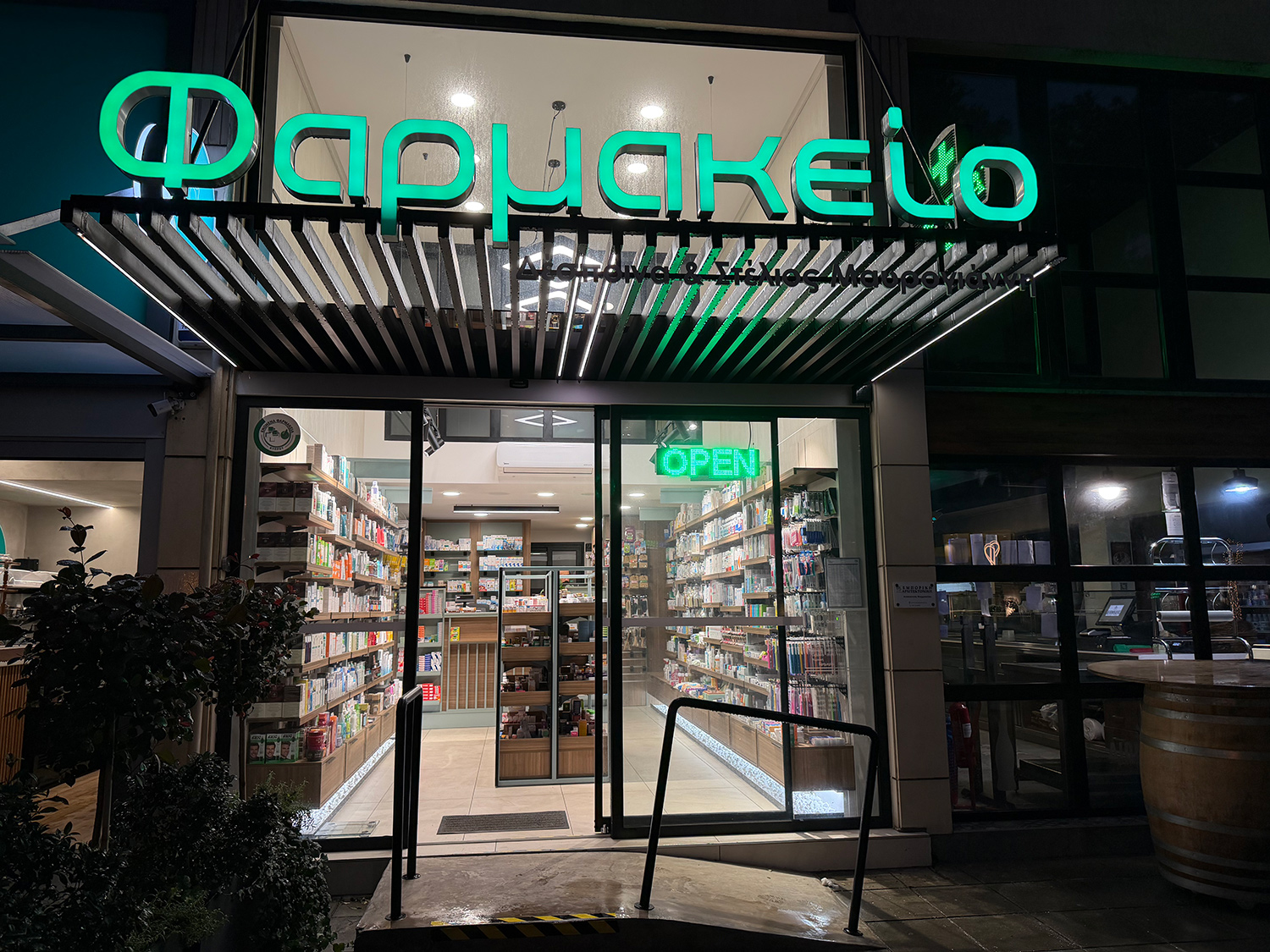
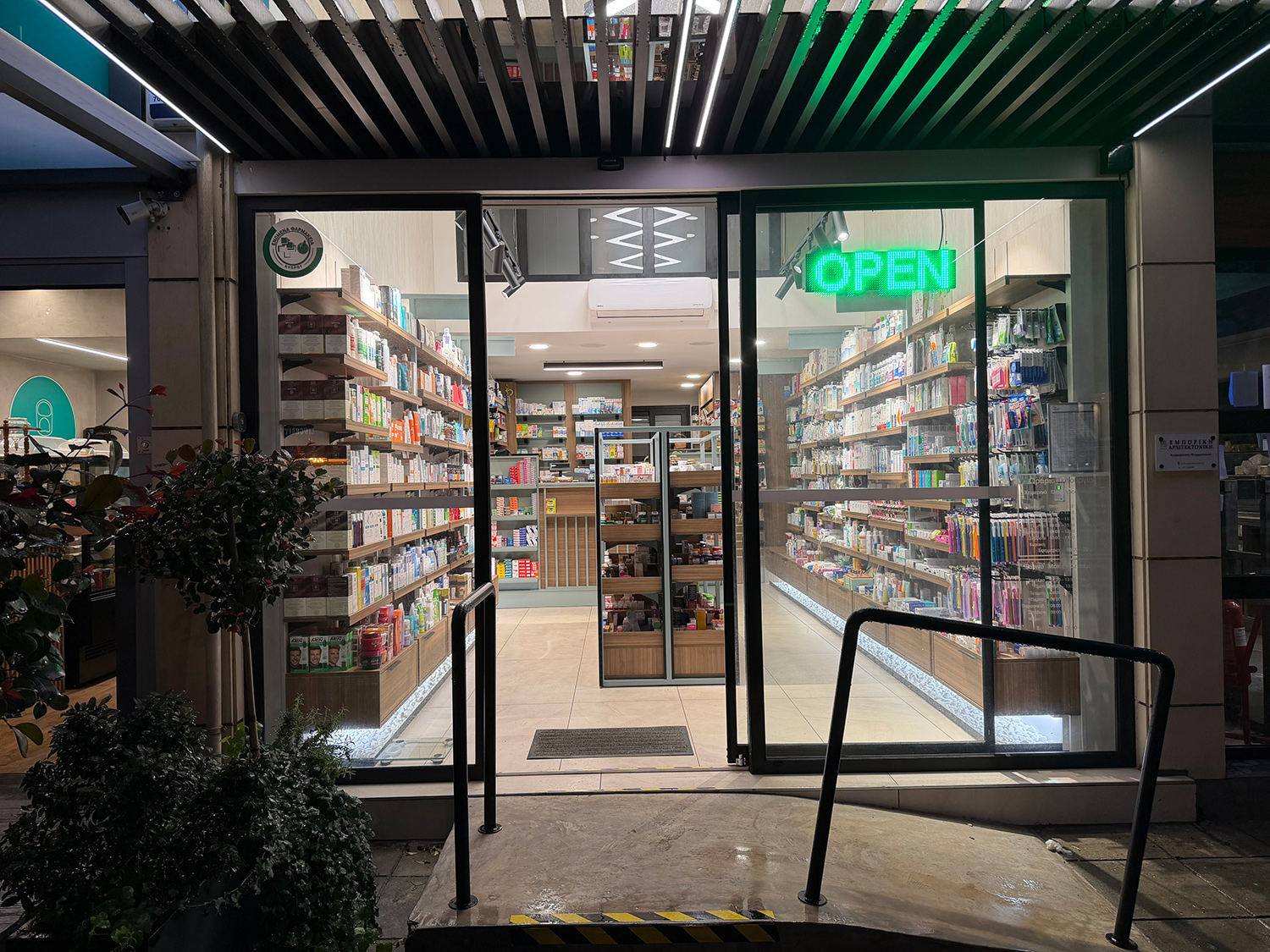
3D models can be used to create photorealistic renderings, allowing you to visually understand elements of your pharmacy renovation and how these will be reflected in their final environment.
You will be able to virtually explore and evaluate — to the extent technically feasible — each of your choices, such as the spatial layout of the store, colour schemes, furniture design, or the exterior façade, before making any final decisions.
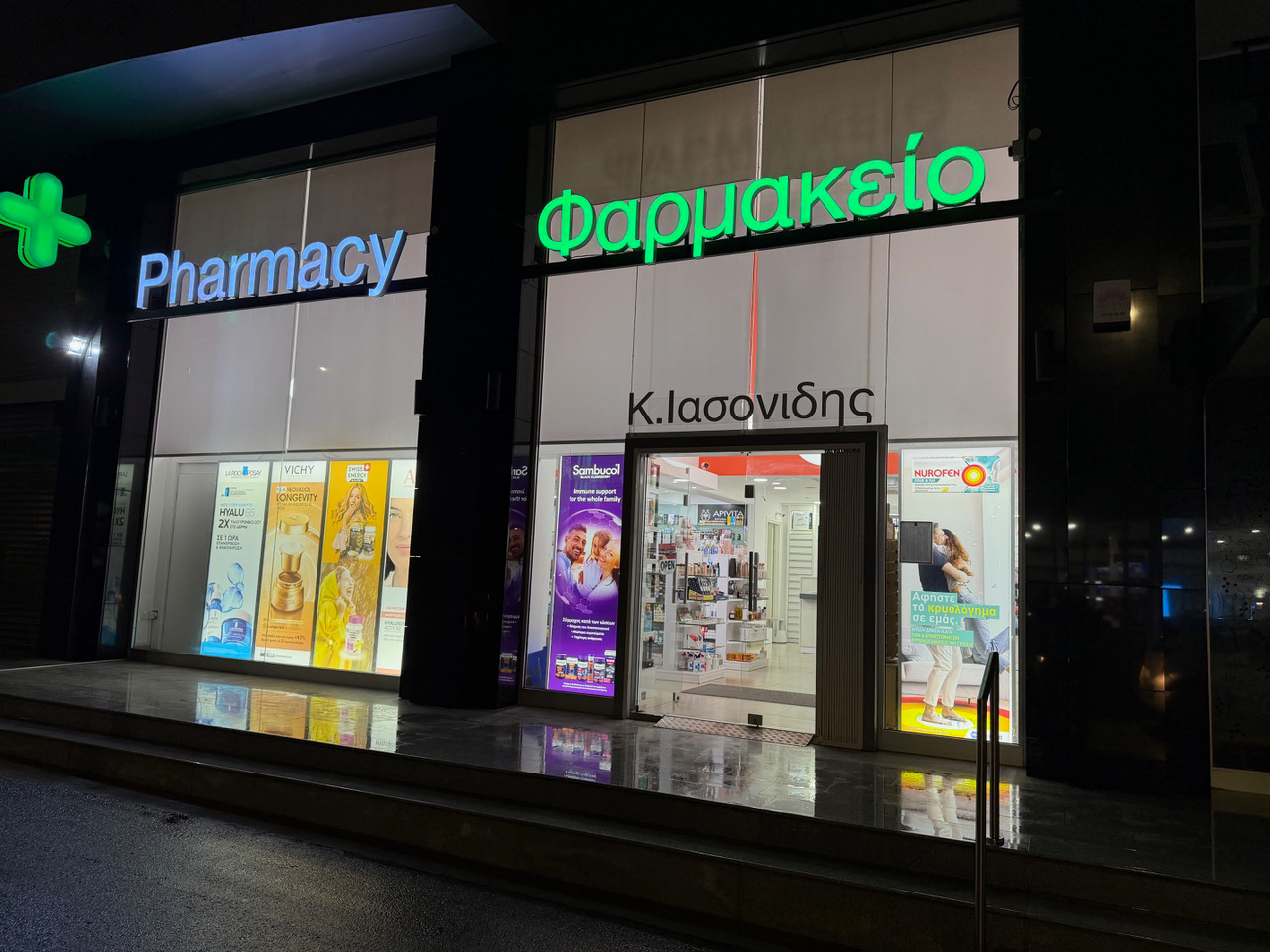

Official representative in Cyprus
Our architecture in each pharmacy inspires soul and a business story to tell.
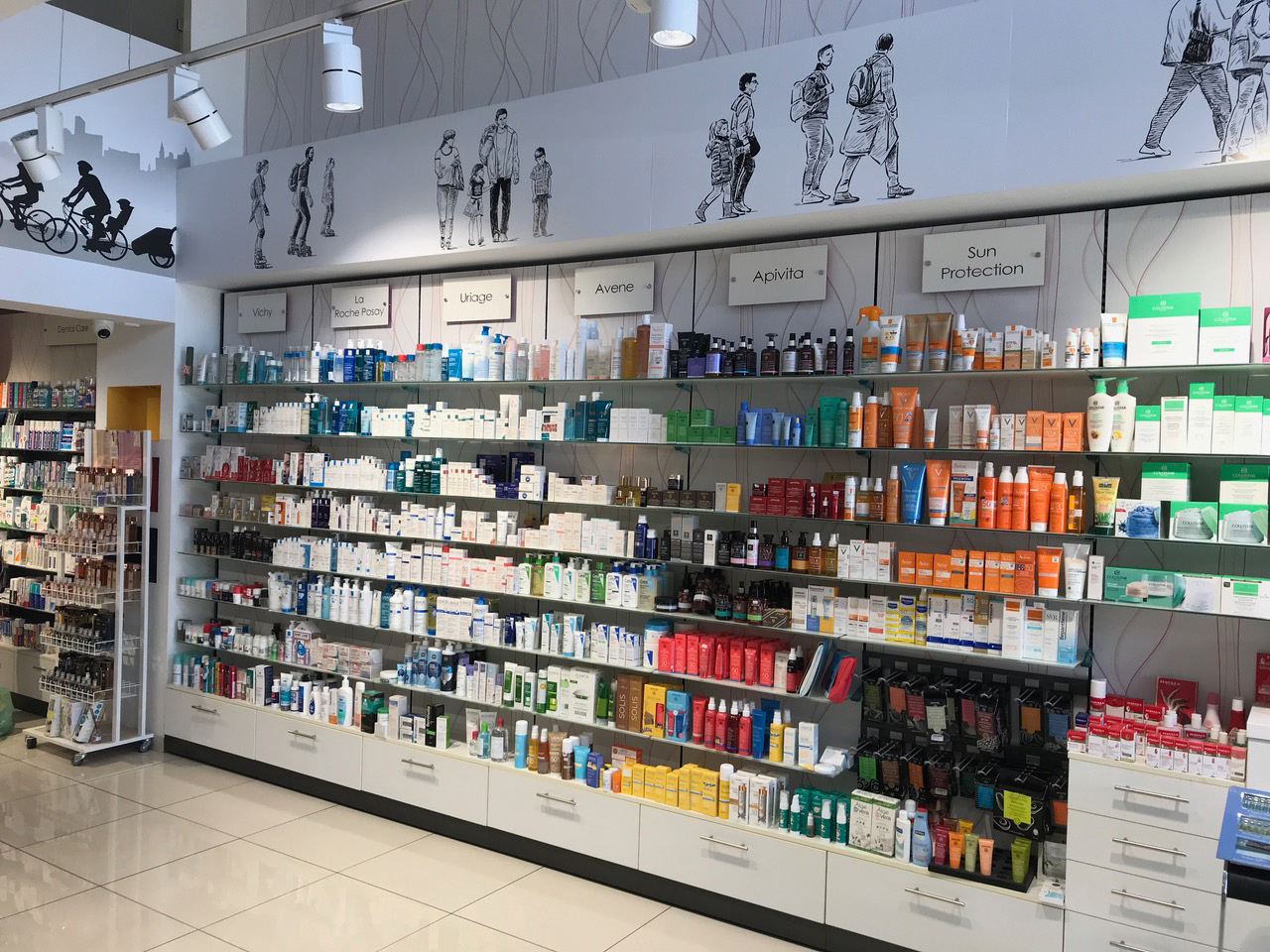
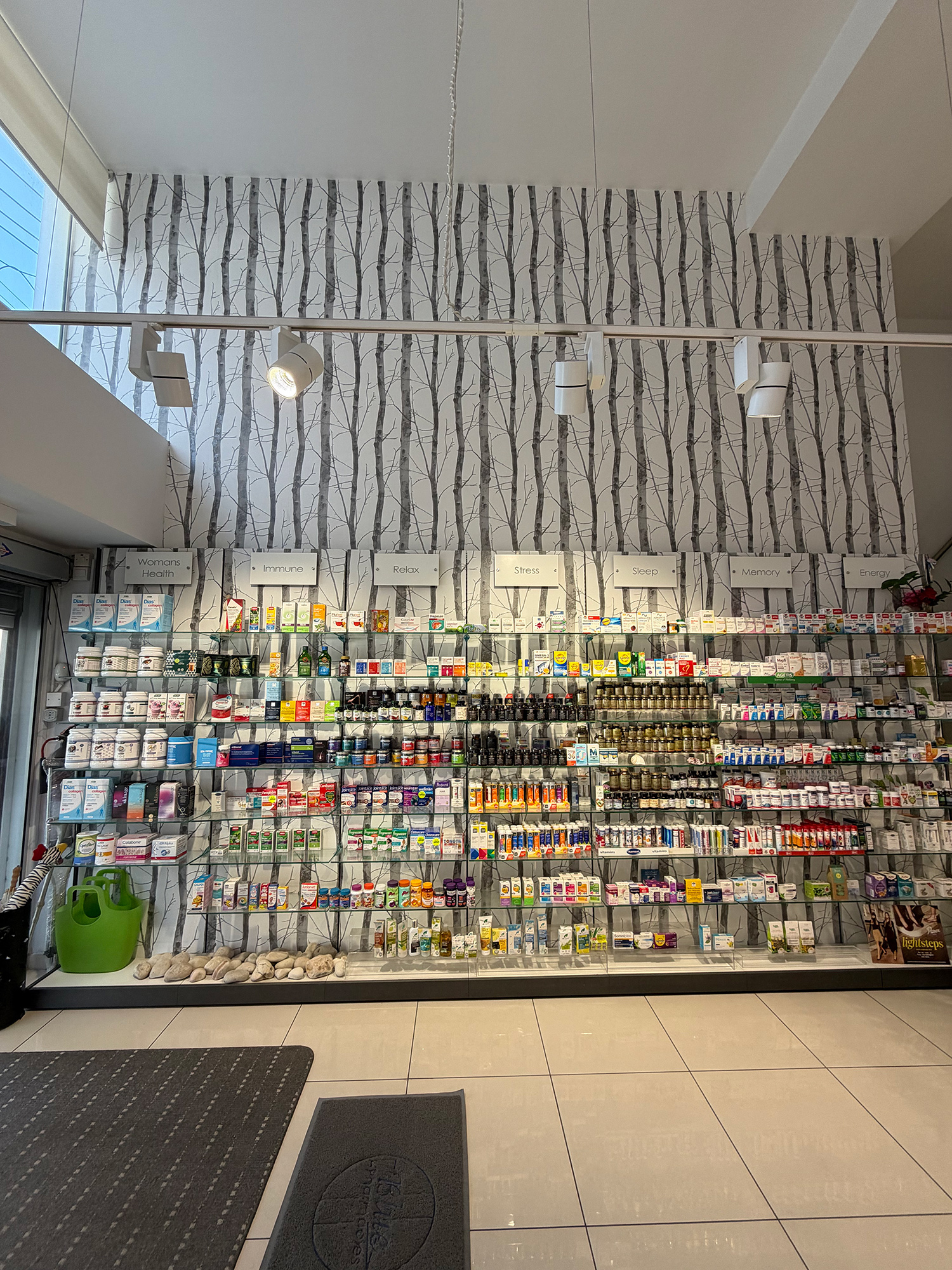
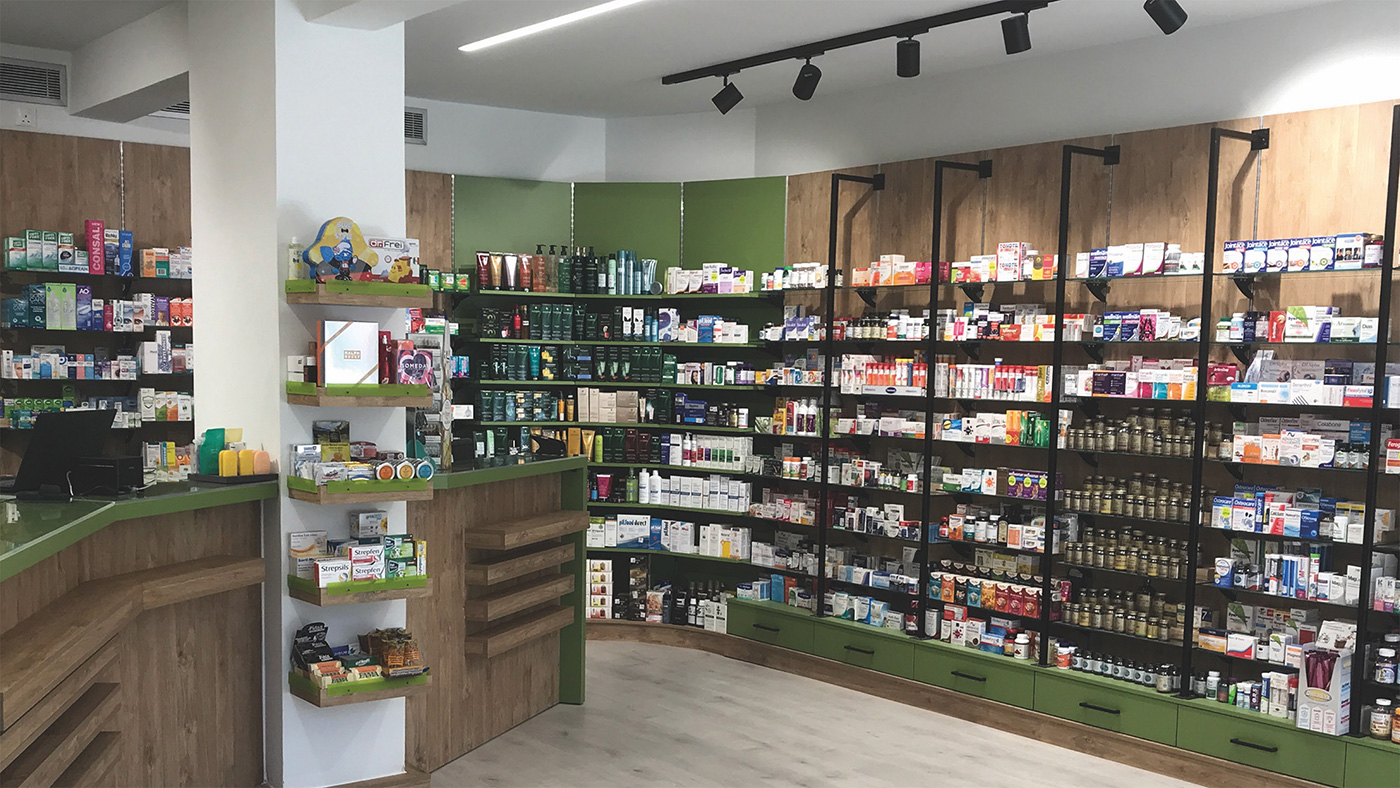







Optimise the commercial potential of your pharmacy!
"*" indicates required fields

Tourist Accommodation
Shops & Offices
Food & Leisure Venues